Philippines DIYBeginner FAQPanel Placement2026 Guide
How Much Shade Is Too Much Shade?
Philippines · 2026 · By Solar Panda
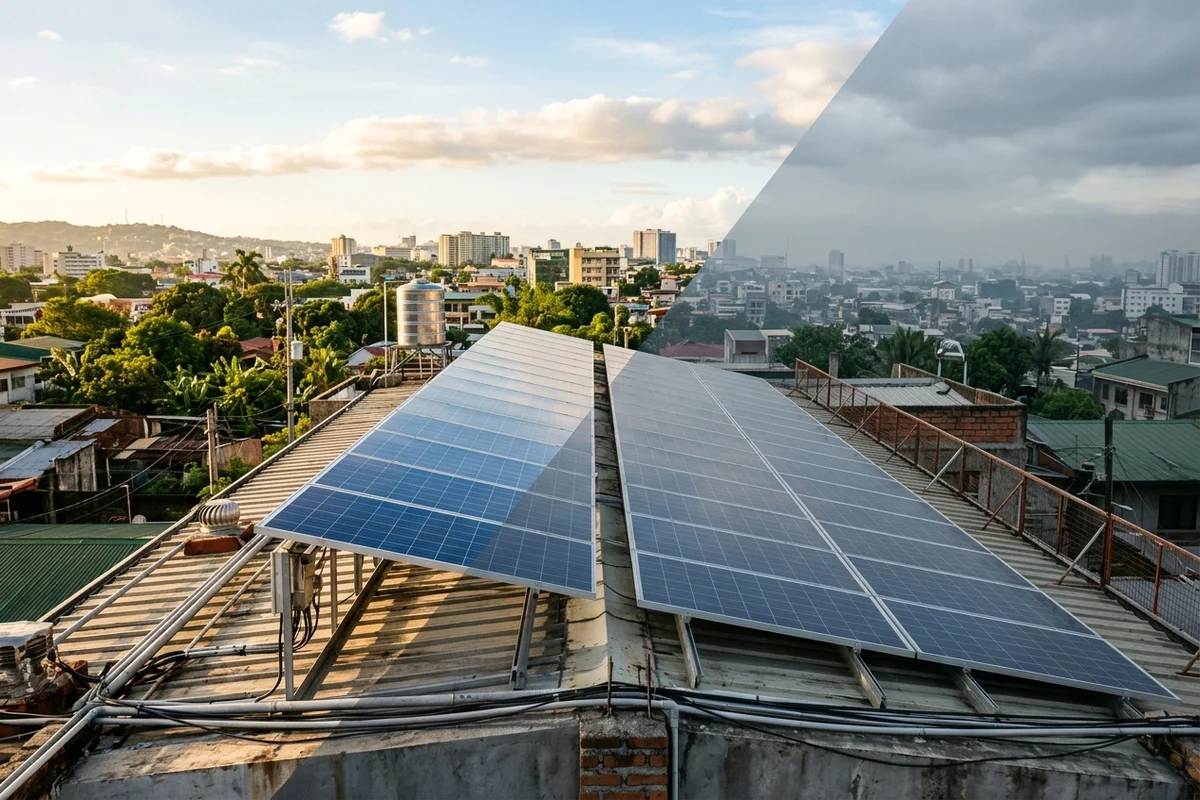
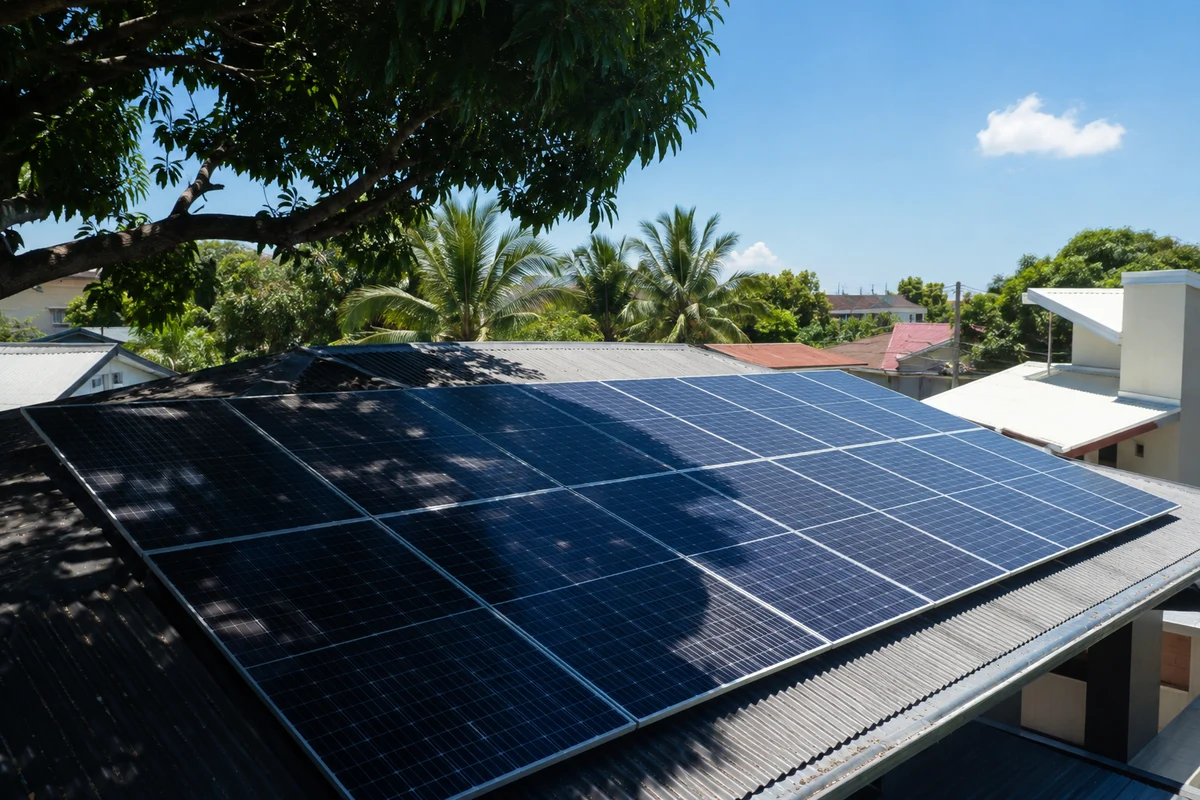
A water tank, a neighbor's roofline, a mango tree that's grown taller since you last looked — some shade on part of your array is almost unavoidable on a real Philippine rooftop. The question that actually matters isn't whether you have any shade. It's whether that shade is quietly costing you far more output than the shaded area alone would suggest.
TL;DR
Shade on solar panels isn't proportional — a small shadow can cost you disproportionately more output than the percentage of panel it covers, because of how panels are wired together in a series string. Panels have built-in bypass diodes that limit the damage, but the affected section still stops contributing. If a fixed obstruction shades part of your array at the same time every day, that's worth solving with layout or wiring changes — not just accepted as a small loss.
Why a little shade costs more than it looks like
A solar cell works by letting current flow through it. Shade a cell, and instead of generating current, it starts to resist the current flowing from the rest of the cells around it — like a kink in a hose the rest of the water still has to push through.
In a series string — panels wired positive-to-negative, one after another, which is the standard wiring for most DIY residential arrays — every panel in that string carries the same current. If one panel is partly shaded, it can't keep up with the current the rest of the unshaded panels want to push. The whole string's output drops toward whatever the shaded panel can handle, not just that panel's own share.
The part that surprises people: a shadow covering roughly 20% of one panel in a six-panel string doesn't just cost you a sixth of that one panel's output. Left unmanaged, it can throttle the output of the entire string, because every panel downstream is limited by the weakest link.
Bypass diodes: the built-in fix, and its limit
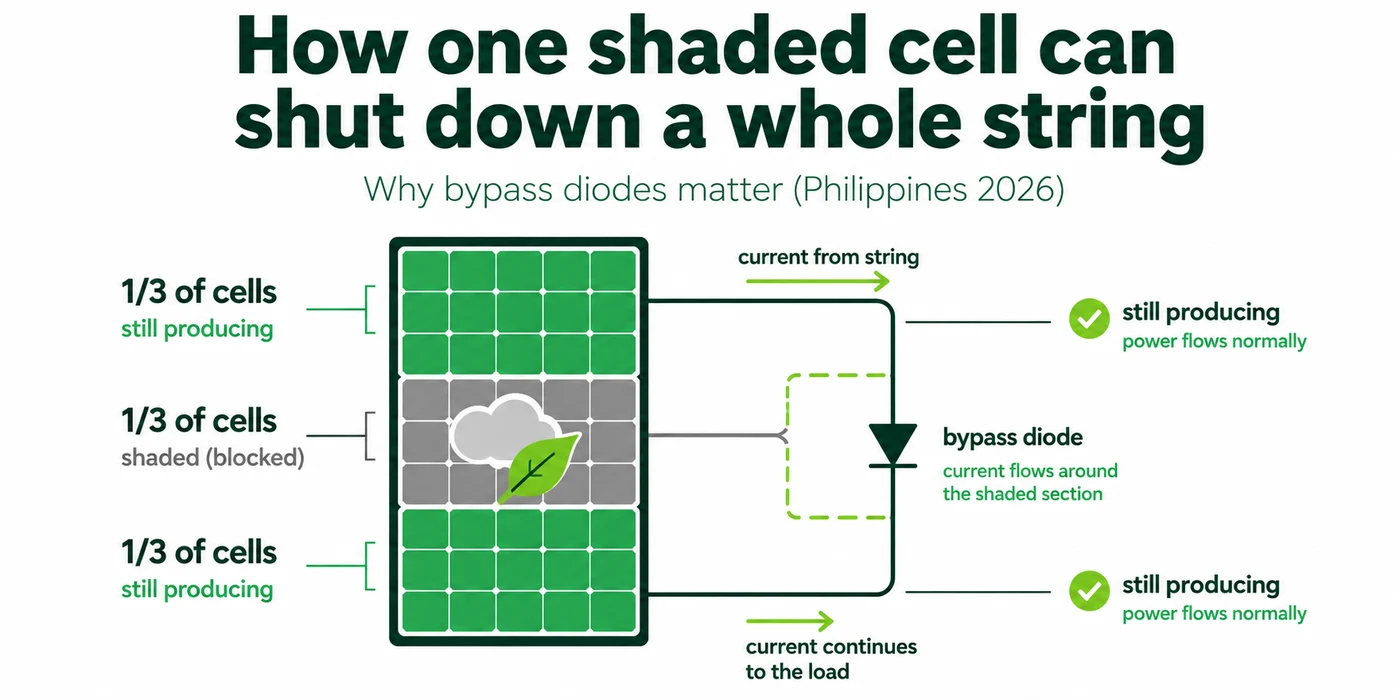
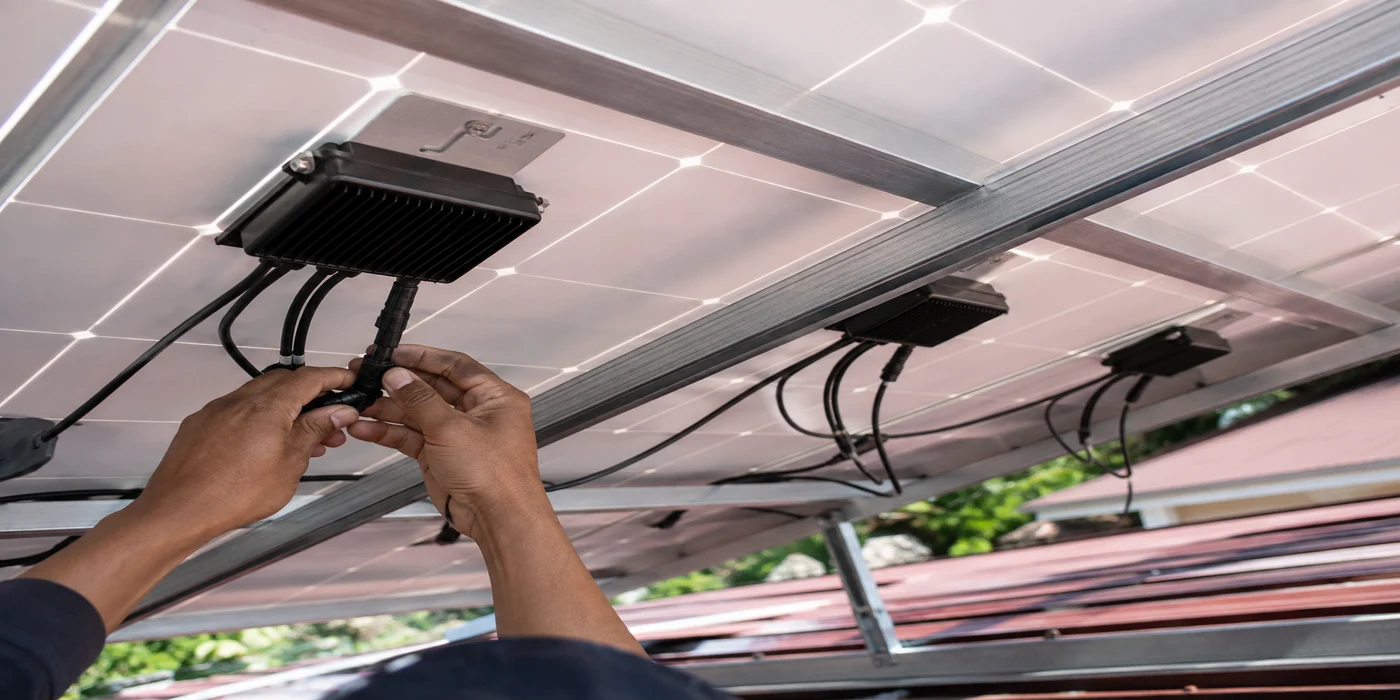
Nearly every solar panel sold today already has bypass diodes built into its junction box — usually three, each covering roughly a third of the panel's cells. When shade drops a section's output enough, its diode activates and reroutes current around that section instead of through it.
This is real protection, and it's why a small shadow doesn't destroy your entire array's output the way it would with no diodes at all. But it comes at a cost: when a bypass diode activates, you lose the output from that entire third of the panel, not just the specific shaded cells within it. A small shadow on the edge of one cell can end up costing you a third of that panel's rated output, because that's how the diode sections are divided.
A practical shade tolerance rule of thumb
There's no single number that applies to every roof, but a reasonable working rule for DIY planning: brief, moving shade — a passing cloud, a bird, a swaying branch for a few minutes — barely matters. Panels recover the instant the shadow passes. Fixed, recurring shade at the same time every day — a chimney's shadow every afternoon, a neighbor's roofline every morning — is worth solving, because it repeats identically, day after day, for as long as the obstruction exists.
If a fixed obstruction shades any part of your array for more than roughly 10–15% of your peak sun hours, on a consistent daily basis, that's past the point of "small loss" and worth actively addressing rather than living with indefinitely.
When to switch to parallel wiring or add optimizers
Parallel wiring — connecting panels positive-to-positive and negative-to-negative instead of in a chain — changes the math. In parallel, each panel's current is independent; a shaded panel's reduced output doesn't drag down the others in the same group. The trade-off is parallel wiring adds current instead of voltage, which affects wire sizing and MPPT input range — covered in how to choose solar wire size.
Module-level power electronics (MLPE) — microinverters or DC power optimizers attached to each individual panel — go a step further, letting every panel run at its own best output regardless of what's happening to its neighbors. This is the most effective fix for a roof with one specific, unavoidably shaded section, at added equipment cost per panel.
For a DIY residential array with only occasional, moving shade, neither is usually necessary. For a roof with one reliably shaded panel every single day, rewiring that panel onto its own parallel branch — or physically relocating it — is often simpler than adding MLPE hardware.
Common shade sources on Philippine roofs
Water tanks and tank stands — a fixed, year-round obstruction that shades the same panels at the same time daily, and one of the most common causes of a "why is my system underperforming" complaint.
Neighboring structures — a two-story extension next door can shade a low, close-set roof for a meaningful chunk of the morning or afternoon, especially with the low sun angles typical at Philippine latitudes.
Trees that grow. A roof that was unshaded at install time isn't guaranteed to stay that way — a fast-growing mango or coconut tree can introduce new shade over just a year or two.
!
The mistake we see most: designing a layout around the shade pattern on install day, without checking how the sun's seasonal angle changes that pattern across the year. A roof section shaded only in December can look perfectly clear during a mid-year site visit.
Common mistakes we see in the DIY groups
Ignoring a small, fixed shadow because "it's such a small area." As covered above, the bypass-diode math means small, fixed shade often costs more than its visual size suggests.
Wiring every panel into one long series string regardless of roof layout. If your roof naturally splits into a mostly-shaded section and a mostly-clear section, wiring them as separate strings (or a separate parallel branch) protects the clear section from the shaded one.
Not rechecking shade seasonally. Sun angle shifts meaningfully across the year even near the equator — see what are peak sun hours for how that affects overall output planning.
What to check before you mount
- "Is any part of this roof shaded by a fixed obstruction at the same time every day, not just occasionally?"
- "If one section is shaded and another isn't, should they be wired as separate strings instead of one long chain?"
- "Has anything nearby — trees especially — grown or changed since I last checked this roof for shade?"
Bottom line
Occasional, moving shade barely matters. Fixed, daily shade on part of your array costs more than its visible size suggests, because of how bypass diodes and series wiring interact. Check your roof for recurring shade before you mount, and wire around it — with separate strings, parallel branches, or MLPE — rather than accepting a throttled string as unavoidable.
Any term you're unsure of is also in the glossary.
Plan your layout before you buy panels
See real panel specs and pricing side by side to plan a layout that works with your roof's actual shade pattern.
Open kW calculatorFrequently asked questions
- Does a small shadow on one solar panel really affect the whole system?
- Yes, if panels are wired in series. Every panel in a series string carries the same current, so a partially shaded panel limits the current the whole string can carry, not just its own output. Bypass diodes limit the damage by rerouting current around a shaded section, but that section still stops contributing.
- What does a bypass diode do on a solar panel?
- Most panels have 2-3 bypass diodes, each covering roughly a third of the panel's cells. When shade drops a section's output enough, its diode activates and reroutes current around that entire third of the panel, protecting the rest of the string but losing that section's output completely.
- How much shade is too much for a solar panel array?
- Brief, moving shade like a passing cloud or swaying branch barely matters since panels recover instantly once it passes. Fixed, recurring shade at the same time every day is worth addressing if it covers more than roughly 10-15% of your peak sun hours consistently, since that repeats identically every single day.
- Should I use parallel wiring instead of series wiring if my roof has shade?
- It depends on your shade pattern. If part of your roof is reliably shaded and part isn't, wiring them as separate strings or a separate parallel branch prevents the shaded section from dragging down the clear section. For a roof with only occasional shade, standard series wiring is fine.