Philippines DIYMaintenanceSafety2026 Guide
How to Clean Solar Panels Safely
Philippines · 2026 · By Solar Panda
Your system is installed, it's running, and now you've noticed the panels are visibly dusty. This one's for you if you already have solar and you're wondering whether that dust is actually costing you anything — and what the safe way to deal with it actually looks like, since the wrong method can do more damage than the dust ever would.
TL;DR
Dust and grime commonly cost dirty panels 5–25% of their rated output, so cleaning is worth doing — but two mistakes cause real damage: cleaning hot panels with cold water (thermal shock can crack the glass) and using a pressure washer (it can force water into seals and create micro-cracks that fail months later). Clean early morning or late afternoon, use a soft brush or microfibre pad with a regular garden hose, and never step directly on the panels.
What dust actually costs you
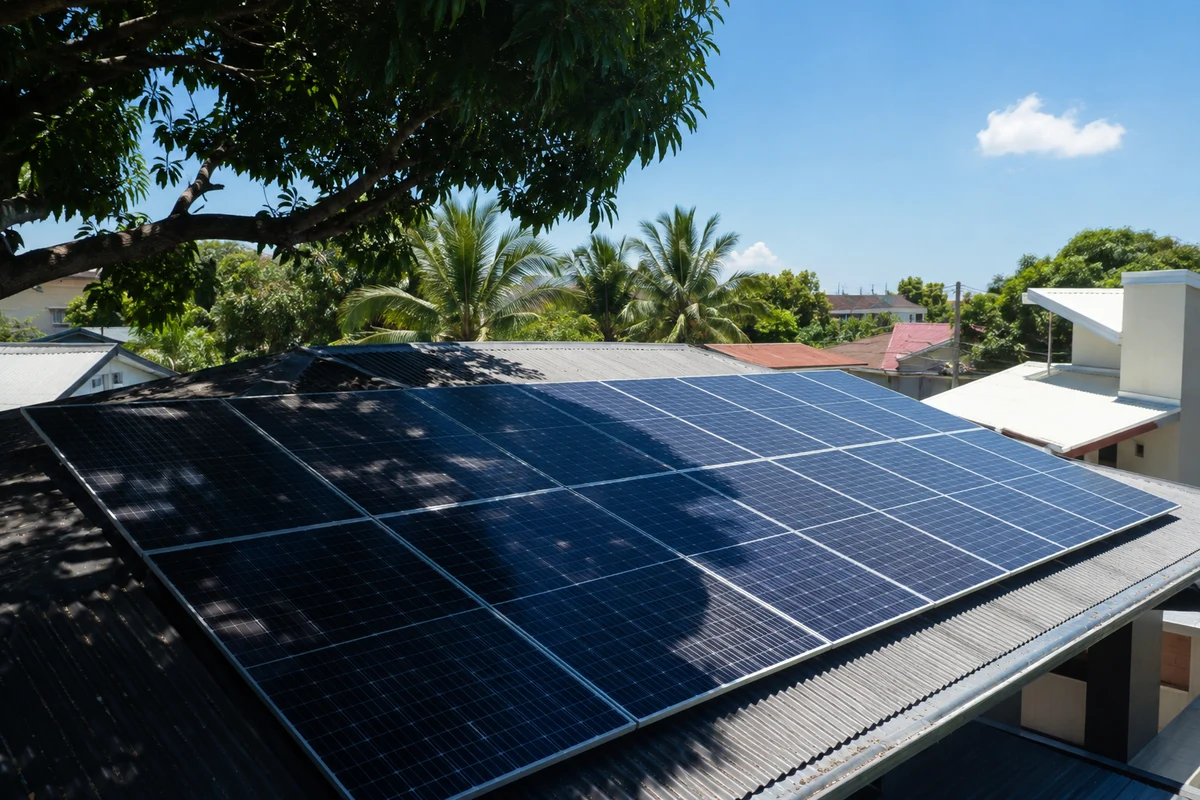
Dust, pollen, and grime sitting on a panel's surface block a portion of the sunlight before it ever reaches the cells underneath. Reported output loss from dirty panels commonly runs 5% to 25%, depending on how long dust has been accumulating and how heavy it is in your area — dust from a nearby unpaved road or construction site accumulates faster than a quiet residential block.
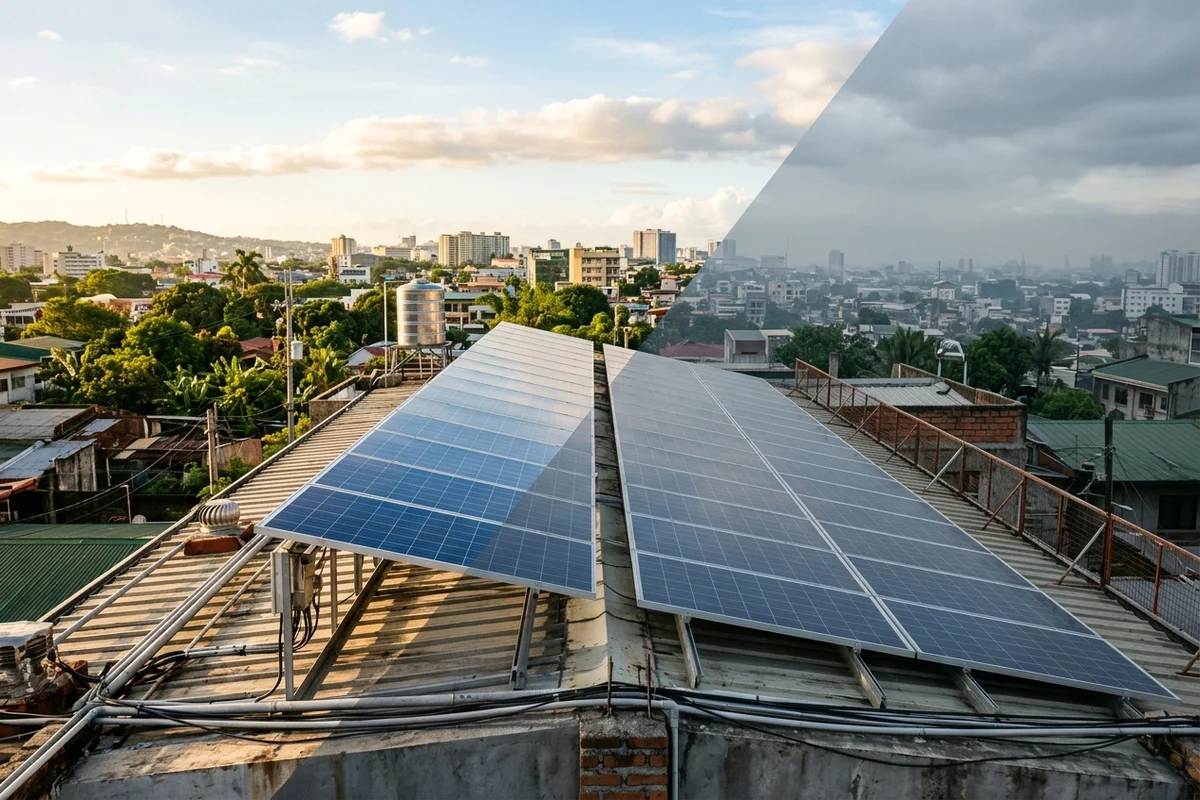
This connects directly to two things we've covered before: how rain affects panel output (rain does clean panels somewhat, but not reliably or completely) and whether panels lose efficiency as they age (dust is a separate, reversible loss — not degradation, and it's the one loss on that list you can actually undo yourself, today).
The two mistakes that actually damage panels
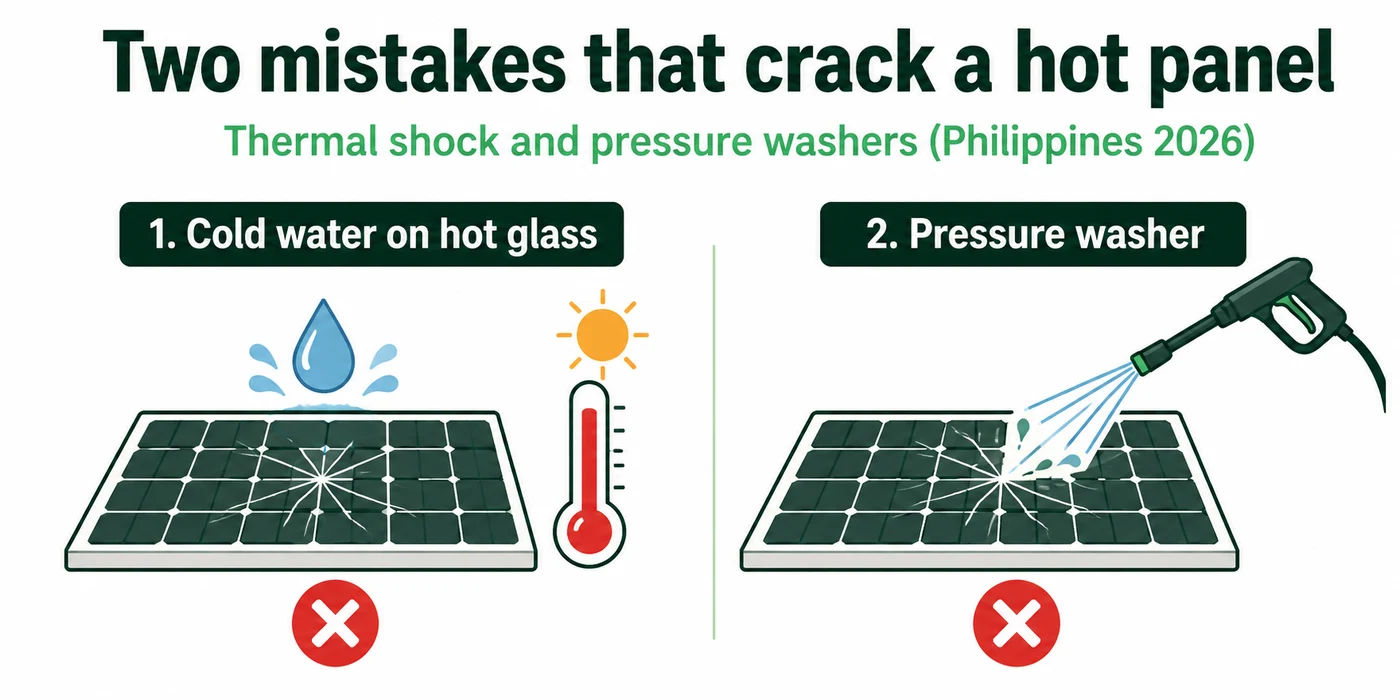
Cleaning a hot panel with cold water. A panel sitting in direct midday sun can reach roughly 60°C or higher. Pouring cool water on that surface creates a sudden temperature swing that stresses the glass — the same physics that cracks a hot drinking glass under cold tap water. The fix is simple: clean in the early morning or late afternoon, when the panel surface has cooled down.
Using a pressure washer. High-pressure water can force its way past seals into the panel's internals, and the force itself can create micro-cracks in the glass that aren't visible right away. Those micro-cracks grow with every heating-and-cooling cycle the panel goes through afterward, and can eventually cause a short circuit — one of the more common causes of a panel quietly failing months after a single bad cleaning.
The safe method
What actually works, in order:
1. Time it for early morning or late afternoon, when the panel surface is cool. Avoid cleaning during or right after peak midday heat.
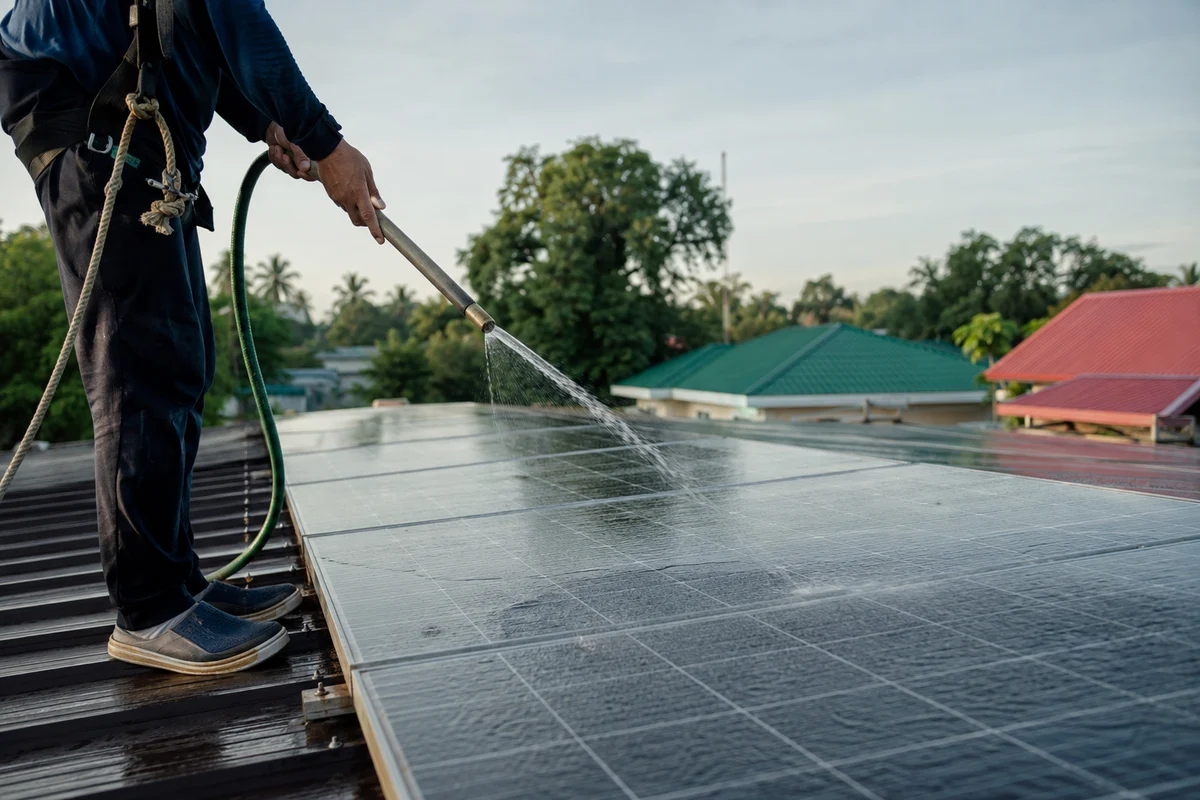
2. Rinse first with a regular garden hose at normal household pressure — this alone removes loose dust without any scrubbing.
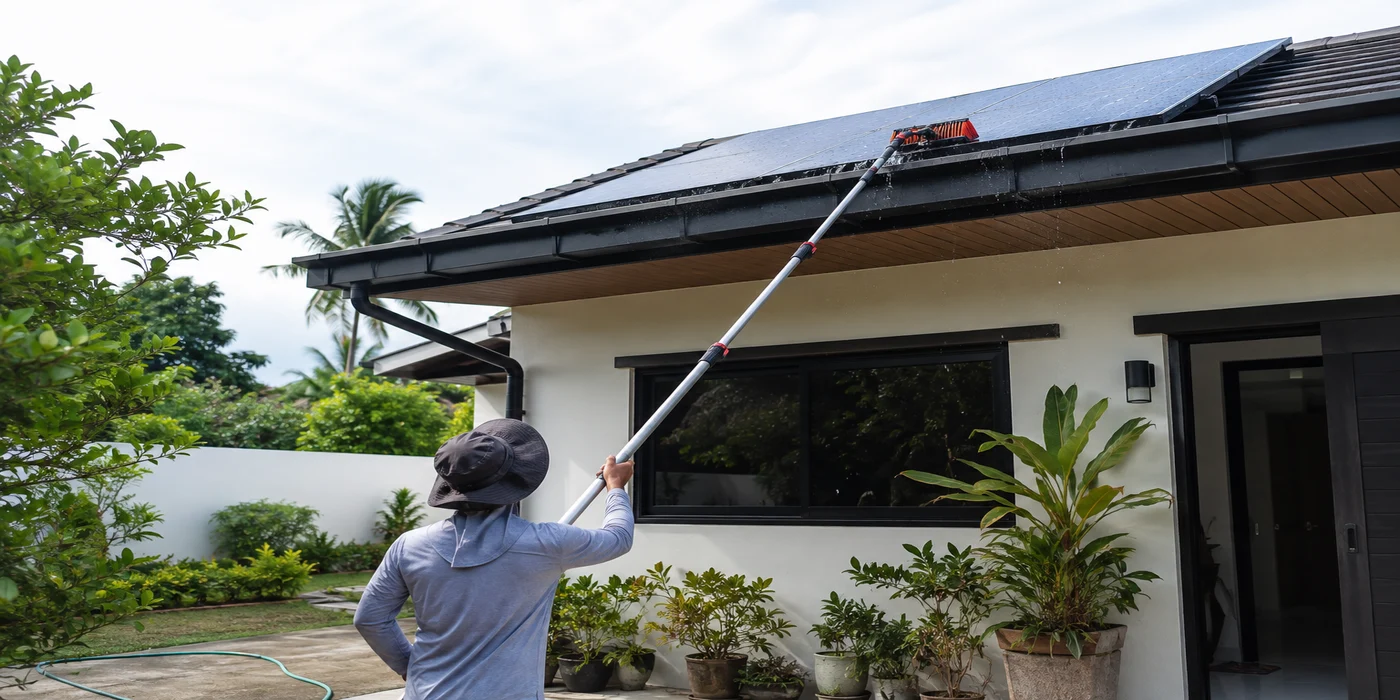
3. For grime that doesn't rinse off, use a soft cleaning brush or a microfibre pad on an extension pole, with plain water. Avoid dish soap or household cleaners, which can leave a residue film that attracts more dust.
4. Rinse a final time to clear any loosened residue, and let the panels air-dry.
The roof-safety risk people underestimate
This is the part that matters most, and it's not about the panels at all — it's about you. Climbing onto a roof to clean panels carries real fall risk, and it's easy to underestimate on a roof you already know well.
Never step directly on the panels. They're built to hold up to wind and hail, not the concentrated weight of a person's foot, and a cracked panel from a misplaced step is an expensive mistake. Work from the roof structure itself, or use an extension pole from ground level or a stable ladder wherever your roof layout allows it.
Never clean alone on a wet or recently-rinsed roof. Wet tile and wet panel glass are both slippery, and a roof is a bad place to discover that the hard way. Have someone aware you're up there, and skip the cleaning entirely if the roof is steep or you're not confident on it — a slightly dustier panel is a much smaller cost than a fall.
!
If you're not confident on your roof, don't climb it for this. A 5-25% output loss from dust is a real but recoverable cost. A fall is not. If your roof pitch, height, or access makes you hesitate, this is a reasonable job to pay someone experienced to do instead.
What NOT to do
Don't use a pressure washer, covered above — it's the single most common cause of cleaning-related panel damage.
Don't use abrasive tools — stiff brushes, scouring pads, or anything that can scratch the glass surface. A scratched panel loses a small amount of output permanently, every time light passes through that scratch.
Don't clean during peak midday heat, covered above — this is the thermal-shock risk.
Don't use dish soap, glass cleaner, or other household chemicals. Plain water is enough for the vast majority of dust and grime; chemical residue can actually attract more dust over time.
Common mistakes we see in the DIY groups
Cleaning far too often, or not at all. Both extremes waste effort. A quiet residential area with little dust may only need a rinse every few months; a dusty area near a construction site or unpaved road may need it more like monthly. Watch your own output data if your inverter shows it, and adjust based on what you actually see.
Assuming rain does the job. Rain helps, but it doesn't reliably clear stuck-on grime or bird droppings, and relying on it alone can let real dust buildup go unnoticed for a long stretch.
Treating a fall risk casually because "I clean my own roof gutters all the time." Gutters and a rooftop covered in glass panels are different risk profiles — panels are slicker, and a slip has a much less forgiving landing.
What to check before you clean
- "Is it early morning or late afternoon, with the panels cool to the touch?"
- "Do I have a soft brush or microfibre pad and a regular garden hose — not a pressure washer?"
- "Can I do this safely from the roof structure or an extension pole, without stepping on the panels themselves?"
Bottom line
Dust is a real, recoverable cost — worth cleaning, not worth ignoring. Clean when panels are cool, use gentle tools and plain water, never a pressure washer, and never step on the glass. The cleaning itself is simple. The two things that actually cause damage — thermal shock and pressure washers — are both entirely avoidable once you know to watch for them.
For the rest of your system's routine upkeep beyond just the panels, see solar setup maintenance. Any term you're unsure of is also in the glossary.
Not sure if dust is actually hurting your output?
Compare your inverter's current output against your original panel wattage to see if a clean is overdue.
Open kW calculatorFrequently asked questions
- How much output do dirty solar panels lose?
- Dirty panels commonly lose 5-25% of their rated output, depending on how long dust has accumulated and how heavy it is in your area. Areas near unpaved roads or construction sites accumulate dust faster than quiet residential blocks.
- Can you pressure wash solar panels?
- No. High-pressure water can force its way past seals into the panel's internals and create micro-cracks in the glass that aren't immediately visible. Those cracks grow with every heating and cooling cycle and can eventually cause a short circuit. Use a regular garden hose at normal household pressure instead.
- Why shouldn't I clean solar panels with cold water at midday?
- A panel in direct midday sun can reach roughly 60 degrees Celsius or higher. Pouring cool water on that hot surface creates thermal shock that can crack the glass, the same physics that cracks a hot drinking glass under cold tap water. Clean in the early morning or late afternoon instead, when the panel surface has cooled.
- Is it safe to clean solar panels myself?
- It can be, with the right method and precautions: never step directly on the panels, work from the roof structure or an extension pole, and don't clean alone on a wet roof. If your roof pitch, height, or access makes you hesitate, it's a reasonable job to hire out rather than risk a fall.