Philippines DIYSolar TriviaBeginner Friendly2026 Guide
Solar Trivia Every DIY Installer Should Know
Philippines · 2026 · By Solar Panda
Some of this is genuinely useful for sizing and troubleshooting your own setup. Some of it is just the kind of thing that makes you sound like you know what you're talking about at the hardware store. Either way, these are ten facts about solar that surprise most first-time DIYers.
TL;DR
Panel wattage ratings are measured at a lab-controlled 25°C, not Philippine rooftop temperatures — so real output is usually lower than the sticker says. Peak sun hours (4-5.5/day in the Philippines) are not the same as daylight hours (11-12/day). And the first practical solar cell, built in 1954, was about 6% efficient — modern panels are 3-4x better and still improving.
1
Your panel's wattage rating is a lab number, not a rooftop number
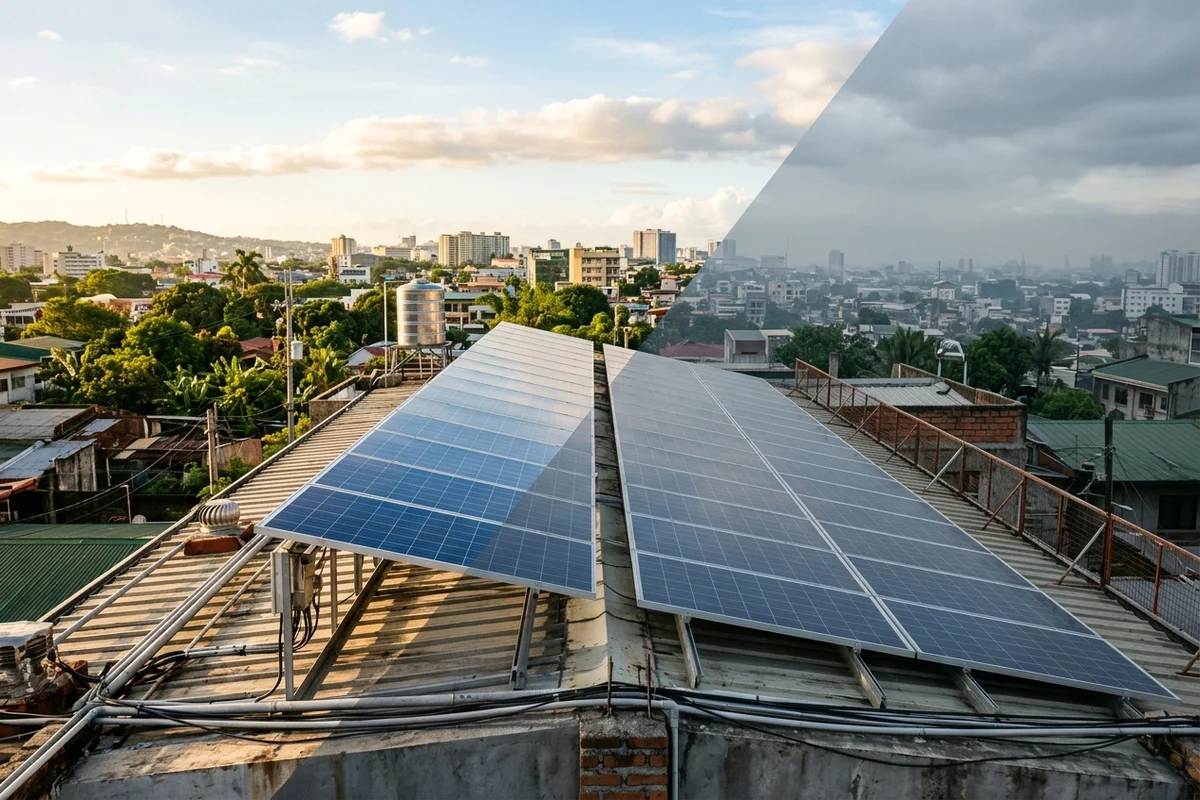
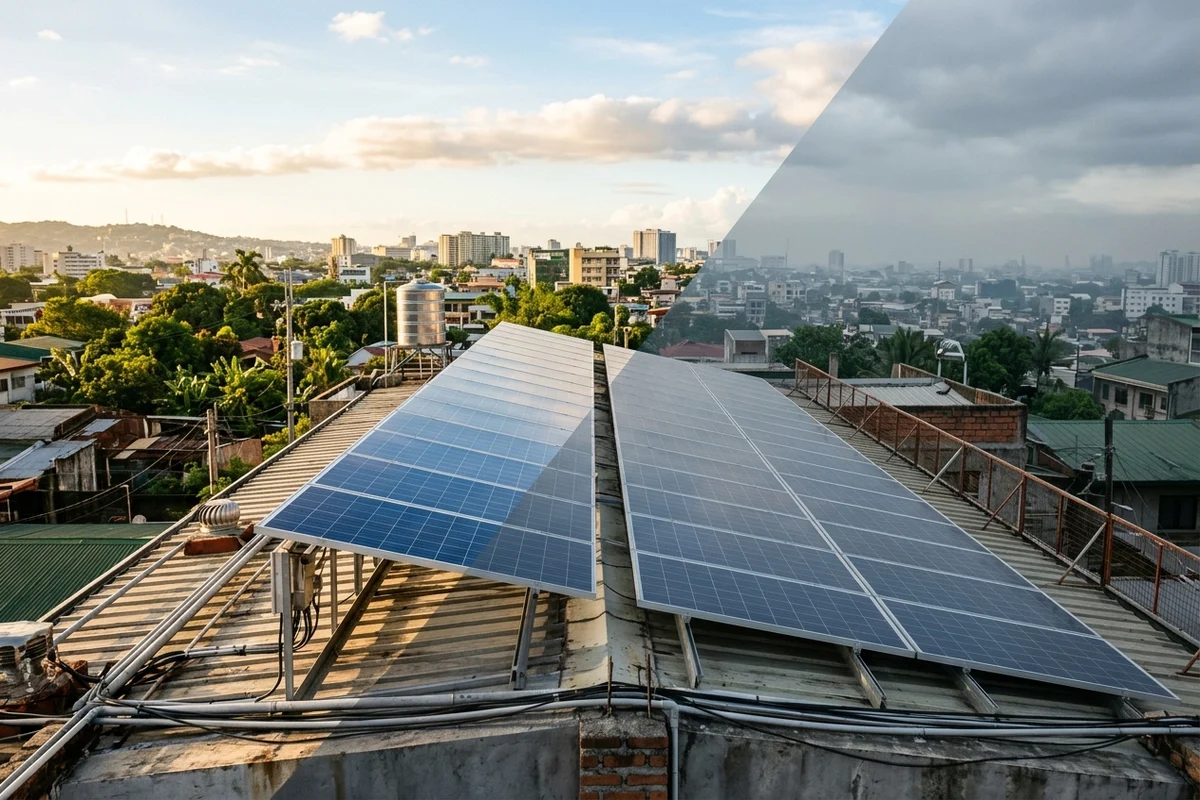
Every panel is rated under Standard Test Conditions (STC): 25°C cell temperature, 1,000 W/m² irradiance, and a specific light spectrum. A Philippine rooftop in direct sun regularly hits 60-70°C on the panel surface — and every degree above 25°C costs you roughly 0.3-0.45% of output. That "460W panel" can realistically produce 10-20% less on a hot noon than its name suggests.
2
Daylight hours and peak sun hours are two completely different numbers
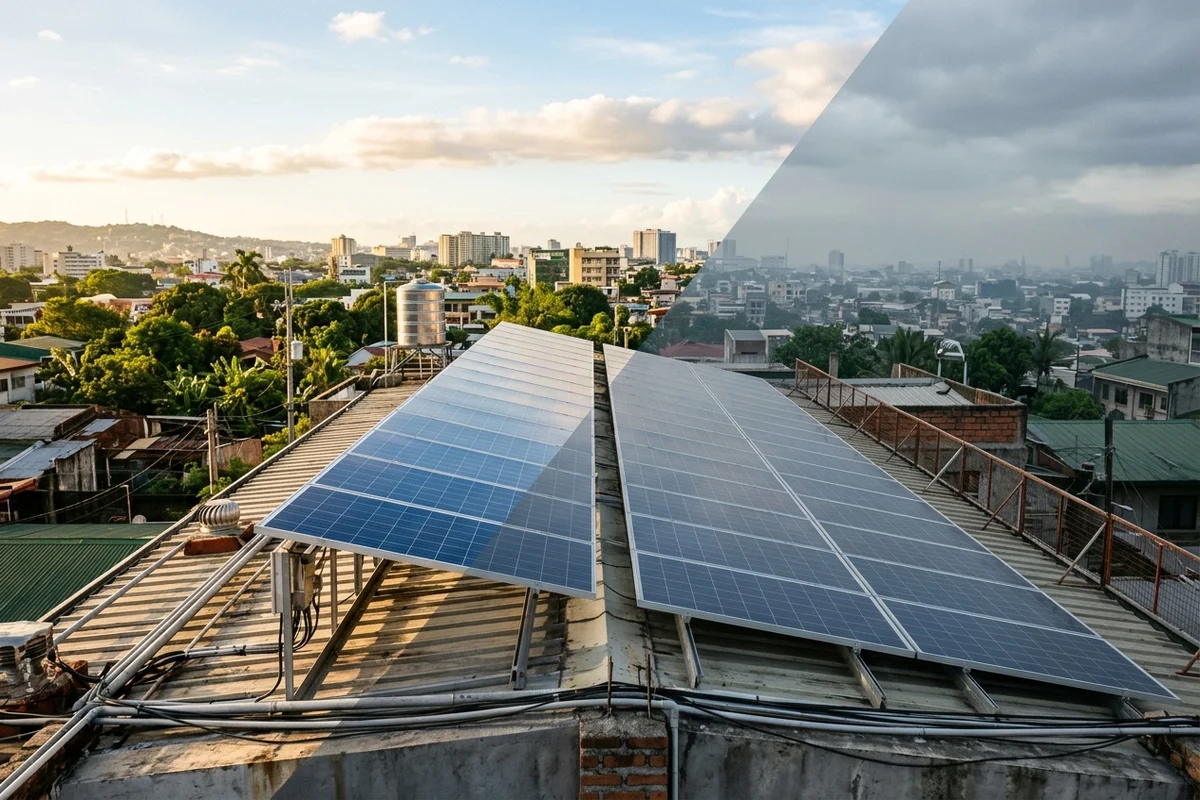
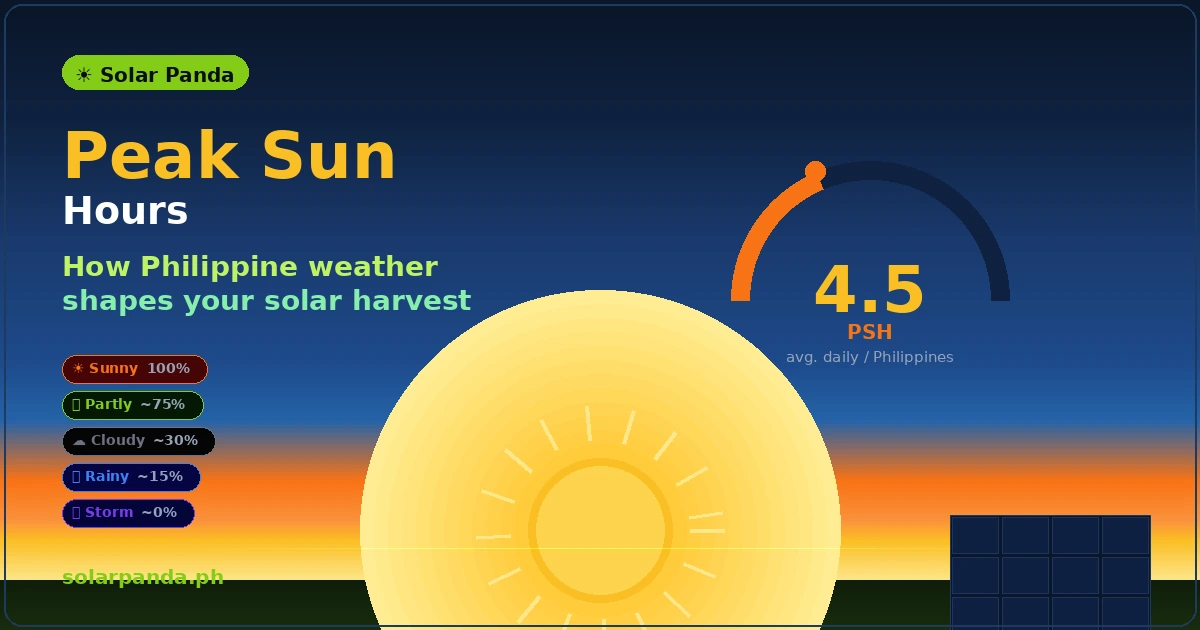
The Philippines gets roughly 11-12 hours of daylight year-round, but only 4-5.5 of those hours count as "peak sun hours" — the equivalent full-intensity hours your panels actually size against. See what are peak sun hours for the full breakdown by region and weather condition.
3
The first practical solar cell was about 6% efficient
Bell Labs demonstrated the first practical silicon solar cell in 1954 at roughly 6% efficiency — a scientific milestone, but too expensive and inefficient for anything beyond satellites and research. Mainstream panels today routinely hit 20-23% efficiency, with premium N-type cells pushing past that. Seventy years of incremental engineering, not a single breakthrough, got solar here.
4
MC4 connectors are a near-universal standard
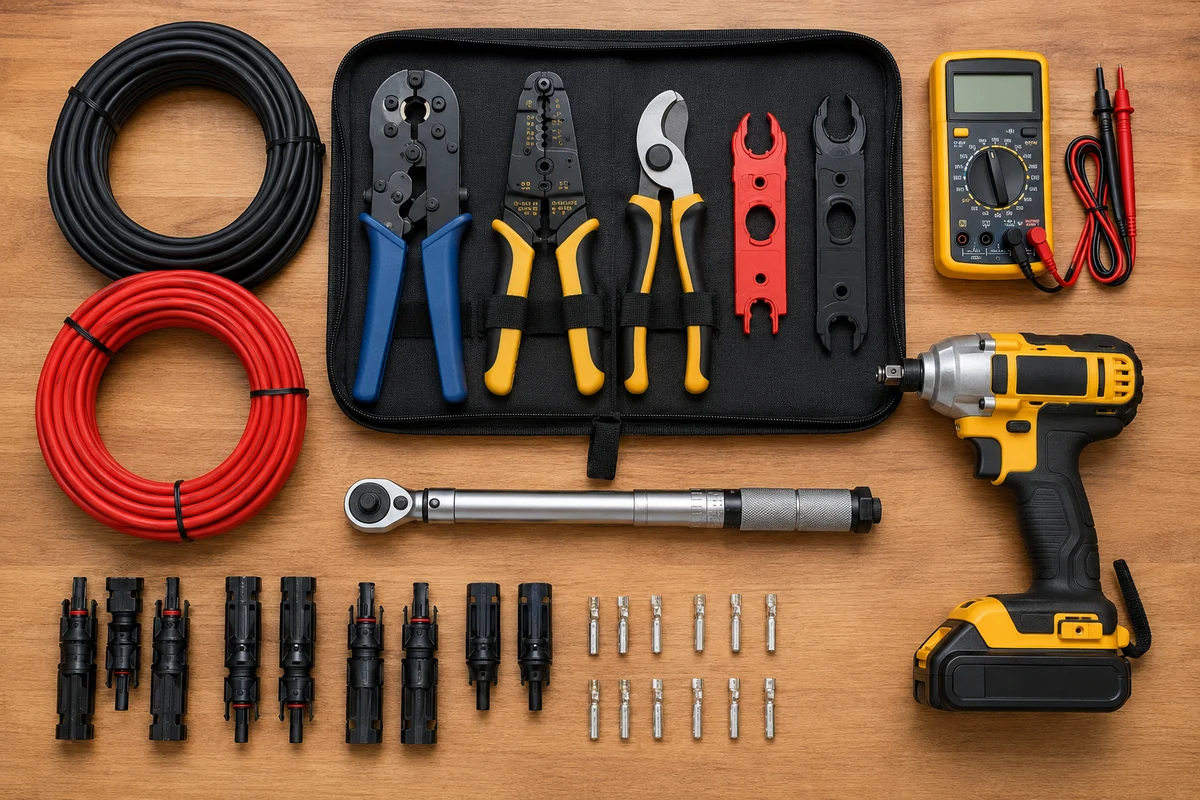
Almost every solar panel sold today — regardless of brand — ships with the same MC4-style connector, originally developed by Multi-Contact (now Stäubli). That's why a crimping kit bought for one panel brand still works when you mix brands in the same array, which is common in phased Philippine DIY builds.
5
LiFePO4 batteries can outlast lead-acid by 6-10x in cycle count
A typical lead-acid deep-cycle battery is rated for roughly 300-500 full charge cycles before significant capacity loss. LiFePO4 (lithium iron phosphate) batteries commonly rate 3,000-6,000 cycles. That difference is most of why LiFePO4 dominates new Philippine DIY builds despite the higher upfront cost — see how to choose a solar battery for the full sizing math.
6
The Philippines has some of the best solar irradiance in Southeast Asia
Sitting near the equator gives the Philippines an average of 4-5.5 peak sun hours daily — genuinely strong by global standards. For comparison, Germany, one of the world's most solar-invested countries, averages only 2.5-3.5 peak sun hours, yet still runs a massive solar sector. The Philippines' geography is a real, measurable advantage most homeowners underestimate.
7
A hybrid inverter and a plain inverter are not interchangeable
A plain inverter only converts DC to AC. A hybrid inverter has a built-in MPPT solar charge controller and can charge a battery bank directly from panels — the two terms get used loosely in casual conversation, but swapping one for the other in a parts list breaks the system. See inverter vs hybrid inverter for the distinction in full.
8
Cloud edges can briefly push panels above their rated wattage
When the sun sits at the edge of a passing cloud, light can briefly scatter and intensify rather than block — a real, documented phenomenon called the "edge of cloud" effect. For a few seconds, panel output can spike above its rated capacity. Your inverter handles this automatically; it's not a malfunction if you ever catch it on a monitoring app.
9
Modern panels lose power slowly, not suddenly
A well-made panel typically degrades about 0.5-0.8% per year, and most manufacturers warranty 25 years of output at roughly 80-84% of original rated capacity. That's not a cliff — it's a gentle, predictable slope. See do solar panels lose efficiency over time for the year-by-year numbers.
10
A little bit of rain is your panels' free cleaning service
Dust, pollen, and bird droppings can quietly cut panel output by up to 25% if left uncleaned. Rain naturally rinses most of that off — which is part of why the morning after an overnight downpour is often one of the highest-efficiency windows of the week, combining clean panels with cooler temperatures. See how to clean solar panels safely for what still needs manual cleaning between rains.
Why this matters beyond trivia night
Every fact above has a practical consequence for sizing or troubleshooting your own setup: temperature derating explains why your system underperforms its nameplate on the hottest days; peak sun hours are the actual number your panel count should be based on, not daylight hours; and cycle life differences are why LiFePO4 dominates new battery purchases despite costing more upfront. Trivia sticks better when you know why it's true.
i
Any term above that's unfamiliar — MPPT, STC, temperature coefficient, cycle life — is in the glossary.
Put these numbers to work
Size a real system using actual Philippine peak sun hours and current component pricing.
Open the kW calculatorFrequently asked questions
- Why does my solar panel produce less than its rated wattage on a hot day?
- Panels are rated under Standard Test Conditions at 25°C cell temperature. Every degree above that costs roughly 0.3-0.45% of output, and Philippine rooftop panels can reach 60-70°C in direct sun, which can reduce real output by 10-20% compared to the rated wattage.
- What's the difference between daylight hours and peak sun hours?
- Daylight hours are simply how long the sun is up — roughly 11-12 hours daily in the Philippines. Peak sun hours are the equivalent number of hours at full 1,000 W/m² intensity, which is what solar sizing is actually based on. The Philippines averages 4-5.5 peak sun hours per day.
- How many more charge cycles does a LiFePO4 battery get compared to lead-acid?
- A typical lead-acid deep-cycle battery is rated for roughly 300-500 full charge cycles, while LiFePO4 batteries commonly rate 3,000-6,000 cycles — about 6-10 times more, which is a major reason LiFePO4 dominates new Philippine DIY builds despite a higher upfront cost.
- Do solar panels lose power suddenly or gradually over time?
- Gradually. Well-made panels typically degrade about 0.5-0.8% per year, and most manufacturers warranty 25 years of output at roughly 80-84% of the panel's original rated capacity — a slow, predictable decline rather than a sudden drop.