Philippines DIYMyths vs FactsBeginner Friendly2026 Guide
Solar Myths vs Facts in the Philippines
Philippines · 2026 · By Solar Panda
Most bad solar advice isn't malicious — it's outdated, half-remembered, or borrowed from a country with a completely different climate. These ten myths circulate constantly in Filipino DIY solar groups. Here's what's actually true, with links to the full math behind each answer.
TL;DR
Panels still produce power in rain and clouds (just less), heat actually hurts output more than most people think, bigger isn't automatically better for batteries or panel count, and DIY solar is legal in the Philippines as long as safety components like grounding and breakers are done correctly.
Myth 1: Solar panels don't work when it's cloudy or rainy
Myth
If the sky isn't clear and sunny, your panels aren't producing anything worth using.
Fact
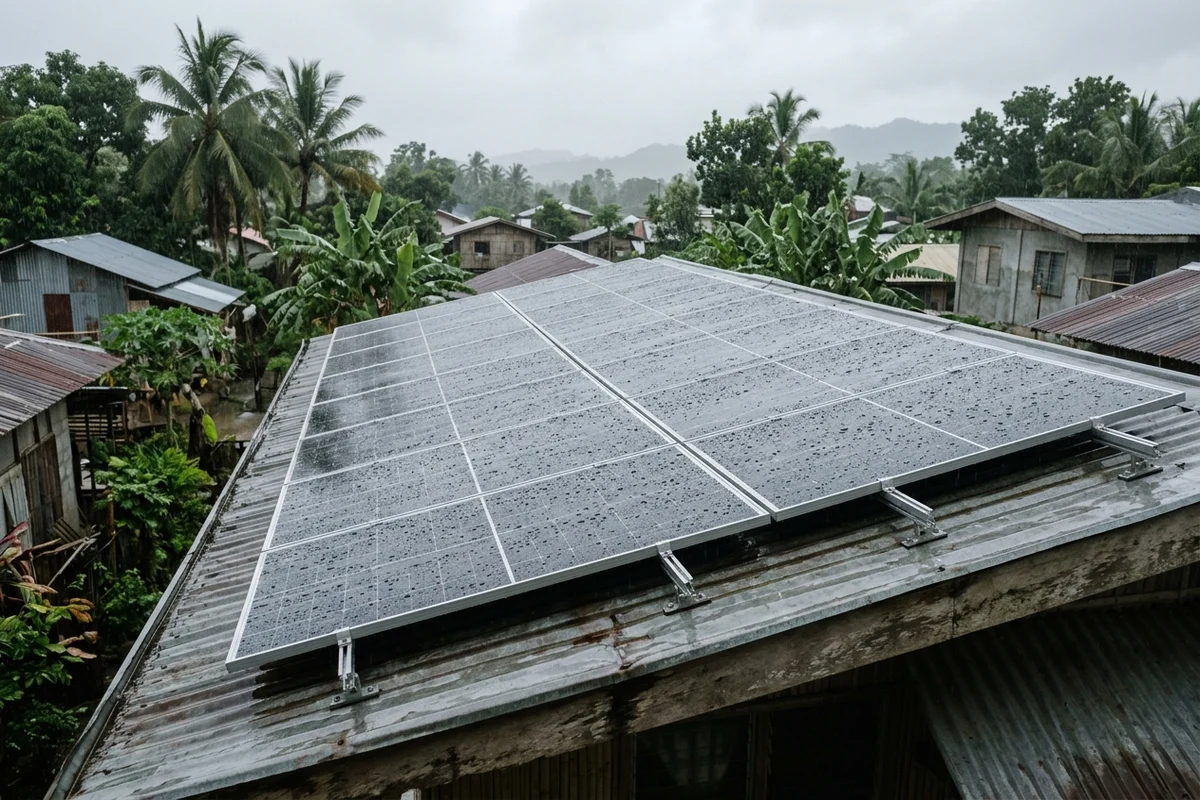
Panels still convert diffuse light even under heavy cloud cover — typically 10-50% of rated output depending on how thick the cloud layer is, and rain itself barely changes that beyond the clouds that come with it. See solar panel output in the rain for the exact ranges by condition.

Myth 2: The hotter it is, the more power your panels make
Myth
Since solar needs sunlight, a scorching hot day should be your best production day.
Fact
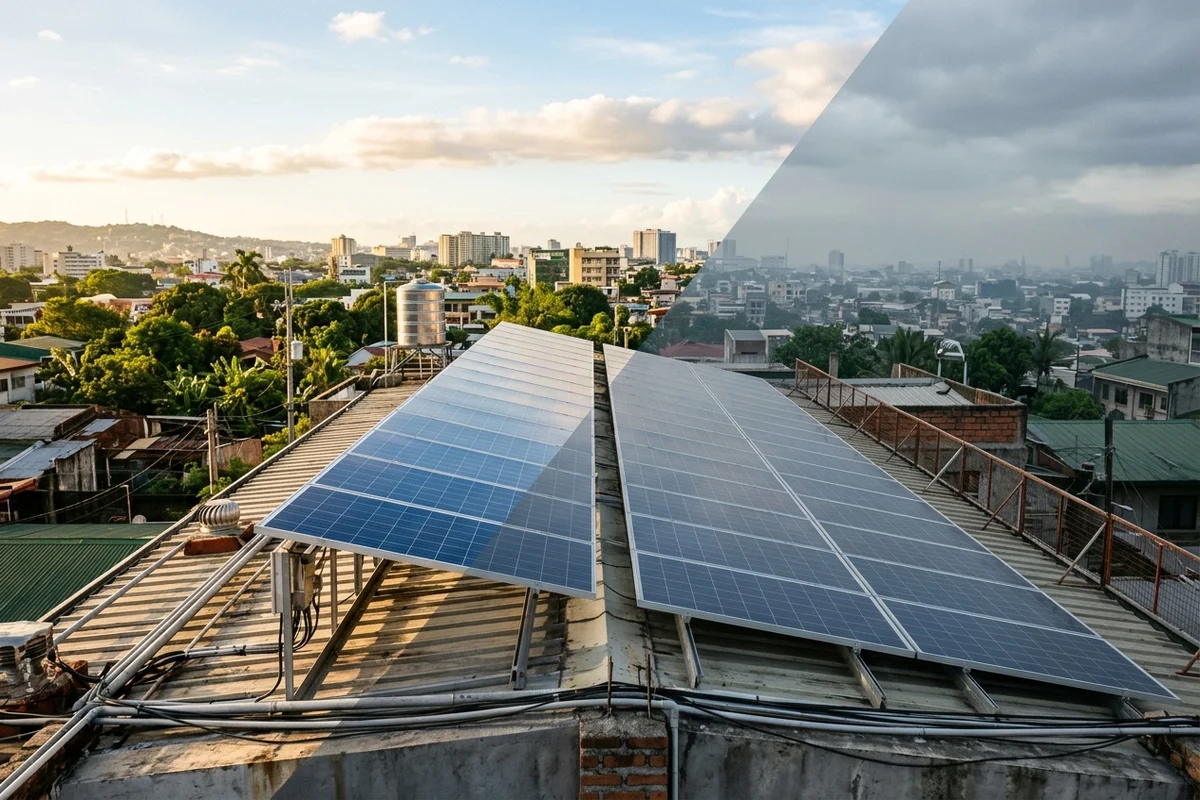
Panels are rated at a lab-controlled 25°C. Every degree above that costs roughly 0.3-0.45% of output, and Philippine rooftop panels can hit 60-70°C in direct noon sun — a real efficiency hit hiding behind what looks like ideal weather. A bright, cooler morning often outperforms the scorching 1PM peak on a per-panel basis.
Myth 3: A bigger battery bank is always better
Myth
More battery capacity means more backup power, so you should always buy the biggest bank you can afford.
Fact
A battery bank your panels and charge controller can't actually fill on a normal day is money sitting idle — oversizing without matching panel and inverter capacity just delays your payback period for no runtime benefit. See how to choose a solar battery for how to size a bank against your actual load and generation, not just your budget.
Myth 4: Any inverter works for a solar setup
Myth
An inverter is an inverter — as long as it converts DC to AC, it'll work for solar.
Fact
A plain inverter only does DC-to-AC conversion. A hybrid inverter also has a built-in MPPT charge controller that manages charging your battery bank directly from your panels — swapping one for the other breaks the charging half of your system entirely. See inverter vs hybrid inverter for the full distinction.
Myth 5: Solar panels lose most of their power within a few years
Myth
Panels degrade fast — expect a dramatic drop in output well before the warranty period ends.
Fact
Modern panels degrade gradually, typically 0.5-0.8% per year, and most carry 25-year warranties guaranteeing roughly 80-84% of original output at the end of that period. See do solar panels lose efficiency over time for the year-by-year breakdown.
Myth 6: Solar panels need direct, unobstructed sunlight to work at all
Myth
Any shade on any part of the array means the whole system stops producing.
Fact
Light shade on a small portion of an array reduces output proportionally rather than shutting everything down, though heavy or prolonged shade on a string can drag down that whole string's production. The real threshold for when shade meaningfully hurts your system depends on how much of the day it's shaded — see how much shade is too much shade.
Myth 7: Once installed, a solar setup needs zero maintenance
Myth
Solar is a "set it and forget it" system — install it once and never think about it again.
Fact
Dust and grime can cut panel output by up to 25% if left uncleaned, and connections, mounting hardware, and batteries all benefit from periodic checks. See how to clean solar panels safely and solar setup maintenance for what actually needs attention and how often.
Myth 8: DIY solar installation is illegal or unsafe without a licensed electrician
Myth
You can't legally or safely install your own solar system in the Philippines — it has to be done by a licensed professional.
Fact
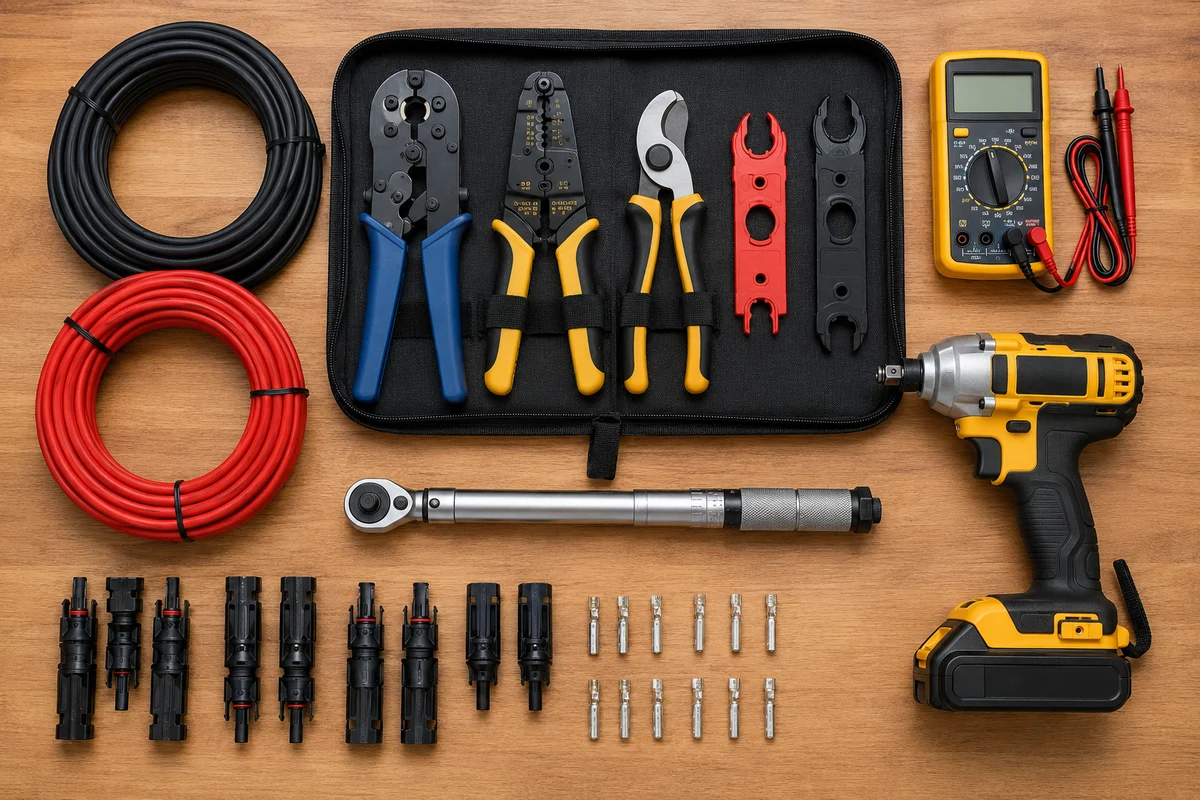
DIY solar for personal residential use is common and legal in the Philippines, but "DIY" doesn't mean skipping safety components — proper grounding and the right breakers and surge protection are still required for a setup that's actually safe. See how to ground a solar system and solar safety components before you skip a step to save money.
Myth 9: Going solar means your electric bill drops to zero forever
Myth
Once you install solar, you'll never see a Meralco bill again.
Fact
Most Philippine DIY setups are sized to offset a portion of consumption, not eliminate it entirely — and many homeowners keep a grid connection as backup for cloudy stretches or when consumption grows faster than the system was sized for. Whether and how fast a system pays for itself depends on your actual usage pattern; see how long until solar pays for itself.
Myth 10: Bigger or more expensive panels always mean more total power for your roof
Myth
Choosing physically larger, higher-wattage panels is the way to squeeze more total capacity out of a fixed roof.
Fact
Standard and large-format panels land at nearly identical watts per square meter — a bigger panel is usually just a bigger sheet of similar cell technology, not a denser one. What actually raises power density is cell efficiency, not panel size. See how many solar panels fit on a 60sqm roof for the full math.
i
Most of these myths come from good intentions — advice that was true for a different climate, an older generation of panels, or a different kind of system. When in doubt, check the specific article for your situation rather than a rule of thumb passed around a group chat.
Bottom line
Solar in the Philippines works differently than the secondhand advice floating around suggests: clouds and rain reduce output, they don't eliminate it; heat is a hidden efficiency cost, not a bonus; and "bigger is better" doesn't hold for batteries, panels, or inverters without matching the rest of the system to it. When a rule of thumb doesn't specify the Philippine climate or your actual load, treat it as a starting point to verify, not a fact to build around.
Any term above that's unfamiliar is in the glossary.
Size your system on real numbers, not rules of thumb
Get panel count, hybrid inverter size, battery bank, and total cost based on your actual consumption.
Open the kW calculatorFrequently asked questions
- Do solar panels still work when it's cloudy or raining?
- Yes. Panels still convert diffuse light under cloud cover, typically producing 10-50% of rated output depending on how thick the clouds are. Rain itself has minimal additional impact beyond the clouds that come with it, and often rinses dust off panels as a side benefit.
- Is DIY solar installation legal in the Philippines?
- Yes, DIY solar for personal residential use is common and legal in the Philippines. However, safety components like proper grounding, correctly sized breakers, and surge protection are still required for a setup that's actually safe — DIY doesn't mean skipping those steps.
- Does a bigger battery bank always mean better backup power?
- Not automatically. A battery bank that your panels and charge controller can't fill on a normal day sits partially idle, and oversizing without matching panel and inverter capacity just delays payback without adding usable runtime.
- Will going solar eliminate my electric bill completely?
- Usually not entirely. Most Philippine DIY setups are sized to offset a portion of consumption rather than eliminate it, and many homeowners keep a grid connection as backup for cloudy stretches or when consumption grows beyond what the system was originally sized for.