Philippines DIYBeginner FriendlyWire Basics2026 Guide
THHN vs THWN vs THHN/THWN-2: What Those Letters on Your Wire Actually Mean
Philippines · 2026 · By Solar Panda
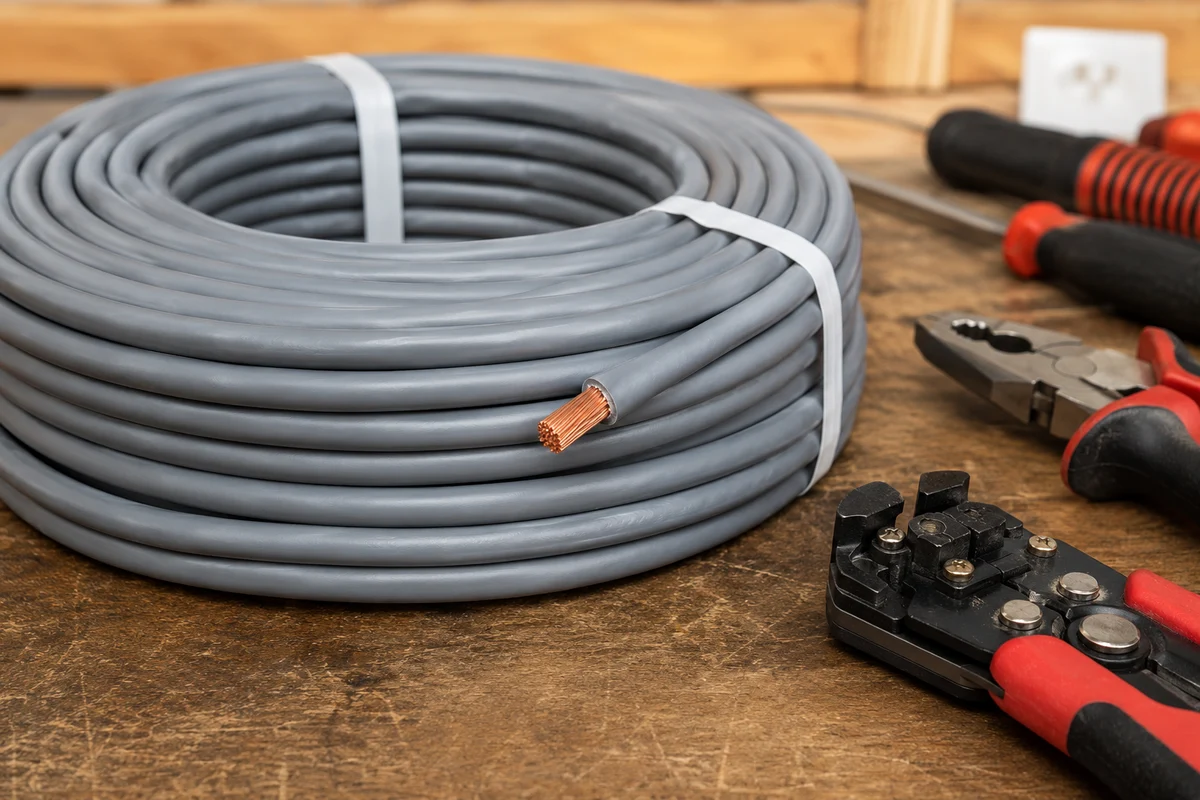
You already bought the wire. It's sitting in your toolbox, or it's already run through conduit into your breaker box. Squint at the jacket and you'll see tiny printed letters — THHN, or THWN, or a longer one, THHN/THWN-2 — next to the gauge number.
Nobody explained what those letters mean when you bought it. The seller just said "good wire ito, gamitin mo lang." This guide is the explanation you should've gotten at checkout.
TL;DR
THHN = Thermoplastic, High Heat-resistant, Nylon-coated. Rated 90°C in dry places, drops to 75°C if it gets wet. THWN = swap the second H for a W (Water-resistant): rated 75°C whether wet or dry, no drop. THWN-2 is the upgraded THWN — 90°C wet and dry, matching THHN's best rating without THHN's wet-weather penalty. Most wire sold today is stamped THHN/THWN-2 on the same jacket — one conductor that legally satisfies both codes at once. That's almost certainly what's already in your toolbox.
Read the letters like a sentence, not a code
Every letter in these names describes one property of the insulation. Read them in order and the "code" turns into plain English.
| Letter | Stands for | What it tells you |
|---|---|---|
| T | Thermoplastic | The insulation is PVC — a plastic that softens with heat, the base material of almost all indoor building wire. |
| H | Heat-resistant | Can handle a higher operating temperature than plain thermoplastic (T) wire. |
| H (second one) | High Heat-resistant | Bumps the dry-condition rating up to 90°C — the "double H" is what separates THHN from plain THN. |
| W | Water-resistant | Approved for wet locations — underground, outdoors, anywhere moisture touches the jacket. |
| N | Nylon-coated | A thin nylon jacket over the PVC that resists scuffing and oil, and lets you pull more wires through a smaller conduit. |
| -2 | Second-generation suffix | Specifically on THWN-2: the wet-condition rating is upgraded from 75°C to 90°C. |
Put them together and the names stop being abbreviations and start being descriptions: THHN is "thermoplastic, high heat, nylon-coated." THWN is "thermoplastic, heat-resistant, water-resistant, nylon-coated." THWN-2 is the same as THWN but with the upgraded 90°C wet rating.
The one number that actually matters: temperature rating, wet vs. dry
Strip away the letters and there's really just one practical question for each wire type: how hot can it get, and does getting wet change the answer?
| Type | Dry rating | Wet rating | Drops when wet? |
|---|---|---|---|
| THHN | 90°C | 75°C | Yes — loses 15°C of headroom |
| THWN | 75°C | 75°C | No, but its best rating is only 75°C either way |
| THWN-2 | 90°C | 90°C | No — full 90°C in both conditions |
| THHN/THWN-2 (dual-marked) | 90°C | 90°C | No — this is the best of both, on one jacket |
Why the temperature number matters at all: a wire's ampacity — how much current it can safely carry — is tied directly to its temperature rating. Insulation rated for a higher temperature can sit on a hotter conductor without breaking down, so it's allowed to carry more current at the same gauge. This is the same 90°C vs. 75°C table used when a hybrid inverter's DC circuit is sized under PEC §6.90.2.2 — see how to choose the right solar wire size for that full sizing walkthrough. This article is about what's printed on the jacket you already have; that one is about picking the gauge in the first place.
Why THHN drops its rating when wet, and THWN-2 doesn't
THHN's PVC insulation and nylon jacket were formulated to resist heat first — the "high heat" is in the name for a reason. But that same formulation isn't proven to hold its properties under sustained moisture at 90°C, so the code derates it to 75°C the moment "wet location" applies. It's not that THHN falls apart in water; it's that nobody tested and certified it to perform at its top rating while wet, so the safe number on paper drops.
THWN-2 uses a different, moisture-stable insulation formulation that keeps its properties at 90°C whether or not water is present. That's the entire reason it exists as a separate designation — it closes the gap THHN leaves open.
i
"Wet location" doesn't mean submerged. Code defines it broadly — conduit buried in soil, an outdoor run exposed to rain, or even a damp crawl space can count. It's about where the wire lives, not whether it's currently raining.
Why most wire today is stamped THHN/THWN-2
Manufacturers found they could build one conductor — same PVC base, same nylon jacket, one added moisture-stable formulation tweak — that legally meets both the THHN spec (90°C dry) and the THWN-2 spec (90°C wet) at the same time. Stamping both names on one jacket means a single reel works for an indoor dry conduit run and an outdoor or below-grade run, so the manufacturer, the distributor, and the electrician only need to stock one product instead of three.
✓
If the reel you bought just says "THHN wire" with no other markings visible, check the jacket itself before assuming. Most general building wire sold in the Philippines today — including what's listed as plain "THHN" on Shopee and Lazada — is manufactured to the dual THHN/THWN-2 spec even when the seller's listing title only mentions THHN. The certainty comes from what's printed on the actual jacket, not the listing title.
How to check which one is already on your reel
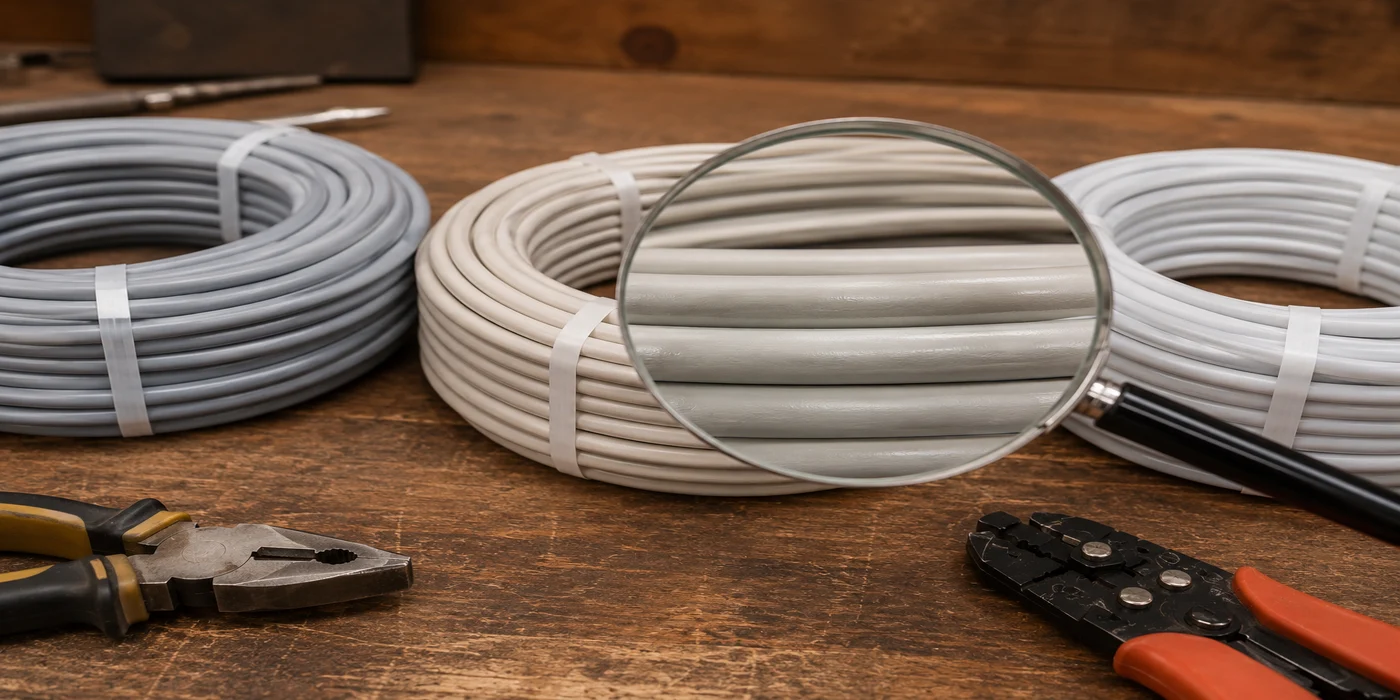
You don't need a datasheet. The designation is printed directly on the wire's jacket, repeated every foot or so, next to the gauge (AWG) and voltage rating (usually 600V).
How to identify wire you already own
- Find a clean, unstripped section of the jacket — printing near a cut end is often smudged or missing.
- Look for the printed sequence: gauge, then insulation type, then voltage. Example: "12 AWG THHN/THWN-2 600V."
- If it says THHN alone with no THWN-2, treat it as dry-location-only — 75°C the moment it's exposed to water.
- If it says THHN/THWN-2 or just THWN-2, it's rated 90°C in both wet and dry conditions.
- No printing visible at all (common on very short offcuts)? Don't assume — ask the seller for the product listing or datasheet before using it anywhere it could get wet.
Does this actually matter for a home solar setup?
Yes, but only where the wire ends up. THHN/THWN-2 is standard indoor conduit wire — battery room wiring, the run from your breaker box to your inverter, anything staying dry inside a wall or enclosure. It is not the same product as PV cable, the UV- and weather-rated cable made specifically for an exposed rooftop DC run in direct sun for years. Even the wet-rated THWN-2 side of a dual-marked conductor isn't built for that kind of permanent UV exposure — "wet-rated" and "UV/outdoor-rated" are different certifications answering different questions.
!
Rule of thumb: THHN/THWN-2 for anything indoors or in conduit, including damp locations. PV cable for anything exposed to the sun on the roof. Using indoor wire outdoors doesn't fail immediately — it fails slowly, as UV breaks down insulation the wet-rating alone was never tested against.
We cover full gauge and ampacity selection, including the PEC multiplier math, in how to choose the right solar wire size.
Mistakes we see in the DIY groups
Assuming "THHN" on the listing title means the wire can't get wet at all, and avoiding it entirely — even for a dry indoor run where it's perfectly fine. Plain THHN is completely appropriate for dry conduit; the wet derating only matters if that specific run will ever see moisture.
Using an unmarked offcut of unknown wire for a battery room run without checking the temperature rating. If you can't read a rating, you can't verify it's adequate for the current your circuit will carry.
Treating THHN/THWN-2 as interchangeable with PV cable for an outdoor rooftop run. The wet rating protects against moisture, not years of direct UV — that's a separate spec entirely.
What to ask before you buy or reuse a reel
- "What's printed on the jacket — THHN only, or THHN/THWN-2?"
- "Is this going anywhere it could get wet, even occasionally?"
- "Is this going outdoors in direct sun — do I need PV cable instead?"
Bottom line
THHN, THWN, and THWN-2 all describe the same thing from different angles — how hot the insulation can safely get, and whether getting wet changes that number. THHN tops out at 90°C but drops to 75°C wet. THWN holds steady at 75°C either way. THWN-2 holds 90°C either way. Most wire sold today is dual-marked THHN/THWN-2, giving you the best rating in both conditions on one reel — check the jacket print to confirm which one is actually in your hand.
Once you know what's on your reel, match it against the actual ampacity your circuit needs using the wire size chart. Any term you're unsure of is also in the glossary.
Match your wire's rating to your circuit
See ampacity, AWG, mm², and real ₱-per-meter prices side by side before you buy.
Open wire size chartFrequently asked questions
- What does THHN stand for?
- THHN stands for Thermoplastic High Heat-resistant Nylon-coated wire: PVC (thermoplastic) insulation rated for high heat up to 90°C in dry locations, with a nylon outer jacket for scuff and oil resistance.
- What is the difference between THHN and THWN?
- THHN is rated 90°C in dry locations but drops to 75°C if the location is wet. THWN is rated 75°C in both wet and dry locations — it never drops, but its top rating is lower than THHN's dry rating.
- What does THWN-2 mean and how is it different from THWN?
- THWN-2 is an upgraded version of THWN rated 90°C in both wet and dry conditions, matching THHN's best dry rating while also being fully rated for wet locations — something plain THWN and plain THHN cannot both do.
- Why does wire say THHN/THWN-2 on the same jacket?
- Manufacturers build a single conductor that meets both the THHN spec (90°C dry) and the THWN-2 spec (90°C wet) at once, so one reel works for both dry indoor conduit and wet or outdoor-adjacent runs. Most general building wire sold today, including on Shopee and Lazada in the Philippines, is manufactured to this dual THHN/THWN-2 spec.